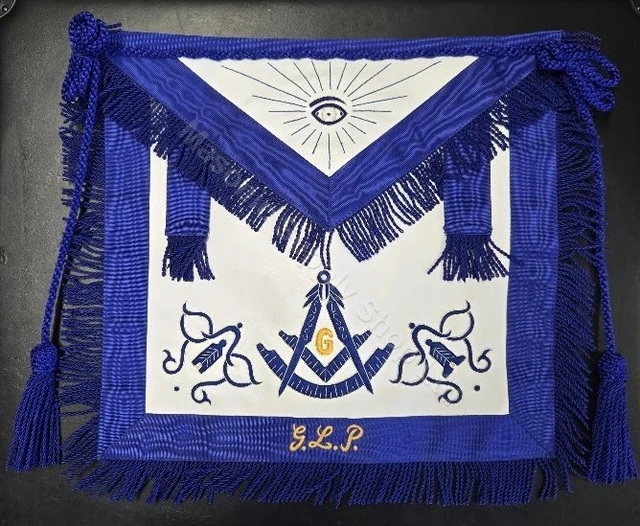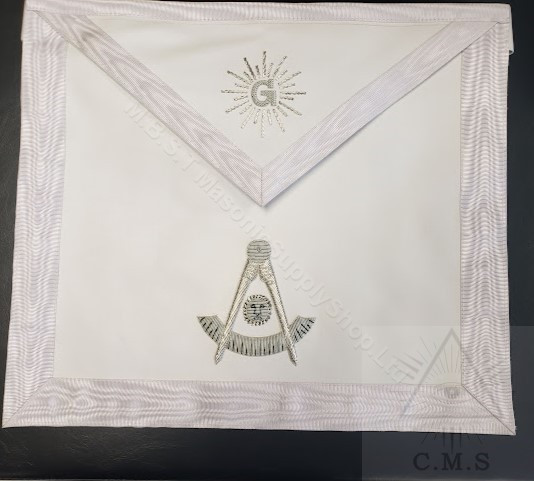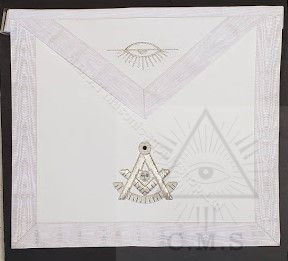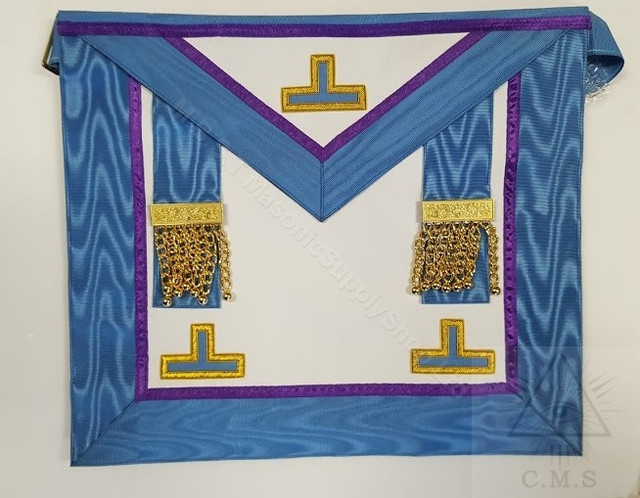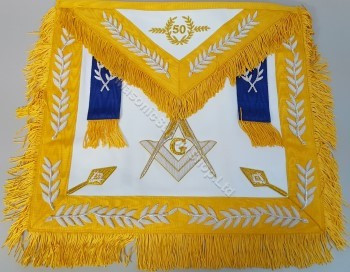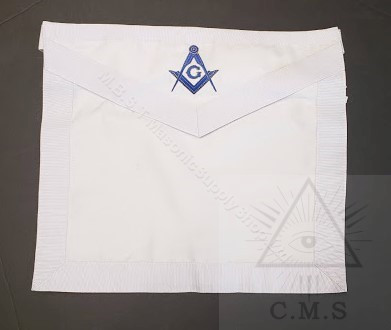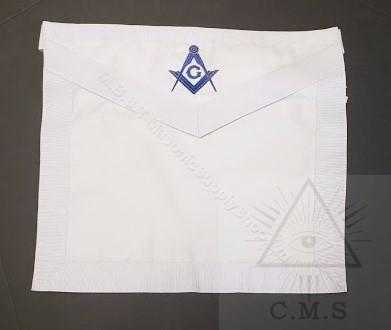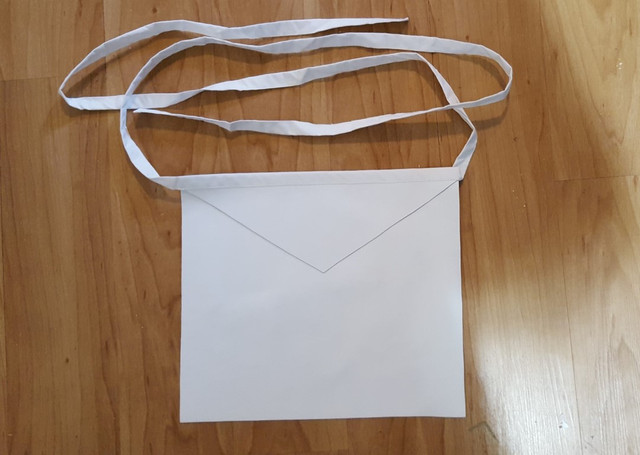
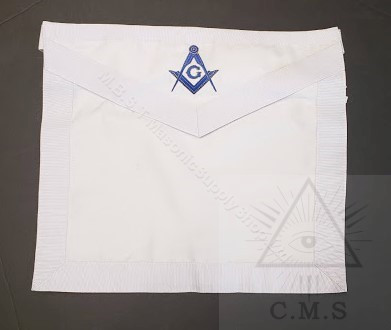
The Masonic apron is the one piece of regalia every Freemason wears.
No item of regalia is more closely tied to Freemasonry than the apron. Every Mason receives one, every Mason wears one in lodge, and many are buried with one. It is often called the badge of a Mason, and for good reason: it is the first gift a candidate receives and the one item every Brother, from the newest Entered Apprentice to the Grand Master, has in common.
From work clothing to symbol
The operative stonemasons of the Middle Ages wore heavy leather aprons to protect themselves from chips of stone and sharp tools. When speculative Freemasonry emerged in the 17th and 18th centuries, the new lodges kept the apron but gave it a symbolic meaning. Early speculative aprons were large and plain, often made of a whole skin. Over the following century they grew smaller, more standardized and more decorated.
Today the apron is usually made of white lambskin, leather or a leather-look material. White lambskin carries particular meaning in the ritual, which is explained to every candidate. That explanation is best heard in lodge rather than read here.
Different jurisdictions, different aprons
One of the first surprises for a Mason who travels is how different aprons look from lodge to lodge. Broadly:
- In many American jurisdictions, Craft aprons are plain white for all three degrees, and officers wear aprons bearing the emblem of their office.
- In English, Canadian and many other jurisdictions, the degrees are marked by additions such as rosettes, a colored border and lining, and tassels. Past Masters' aprons add levels.
- Grand Lodge aprons are more elaborate everywhere, often with gold lace, emblems and fringe.
Your Grand Lodge sets the rules on what you may wear. Always check with your lodge Secretary before buying. For an overview of types, see aprons by degree and office.
Buying your first apron
Many lodges present the candidate with his first apron. After raising, most Brothers buy their own Master Mason apron, and later a Past Master's apron if they serve in the East. When you buy:
- Confirm the pattern your jurisdiction uses, including colors, rosettes, border width and any emblems.
- Choose the material. Lambskin is traditional; synthetic leather is durable and easier to clean.
- Decide whether you need a case. A good case keeps the apron flat and clean for years.
- Check the belt or ties. Some aprons fasten with a snake hook belt, others with ties. Make sure it fits comfortably.
How Masonic aprons are made
Many Masonic aprons are made to order by specialist regalia makers. Hand embroidery, bullion work and lambskin or leather are labour-intensive, so allow time when ordering a decorated Masonic apron for a specific date such as an installation.
Aprons as gifts
An apron is a meaningful gift for a newly raised Brother, a new Worshipful Master or a Brother receiving Grand Lodge honors. If you're buying for someone else, ask a member of his lodge to confirm the correct pattern first.
Where to buy
Masonic Supply Shop designs and makes its own aprons and regalia as well as carrying aprons from other makers. Browse their full apron range, or look at lodge and Grand Lodge regalia for collars and jewels to match.
FAQ
Can I wear my apron in another jurisdiction?
Visitors usually wear the apron of their own jurisdiction. Check with the lodge you're visiting.
Is a lambskin apron worn in lodge every meeting?
Customs vary. Some lodges keep the presentation lambskin for special occasions and use a working apron at regular meetings.
What happens to a Mason's apron when he dies?
Many Masons are buried with their apron, or it is presented to the family at a Masonic memorial service.